

Isolation rooms. No play time. Detentions. Suspensions.
Sometimes these behavioural sanctions work. Sometimes they don’t. Or maybe they work for short-term compliance, but the behaviour eventually creeps back in.
In particular, the punitive approach of isolation can have adverse effects, increasing feelings of loneliness, anxiety, and depression, especially for vulnerable students.
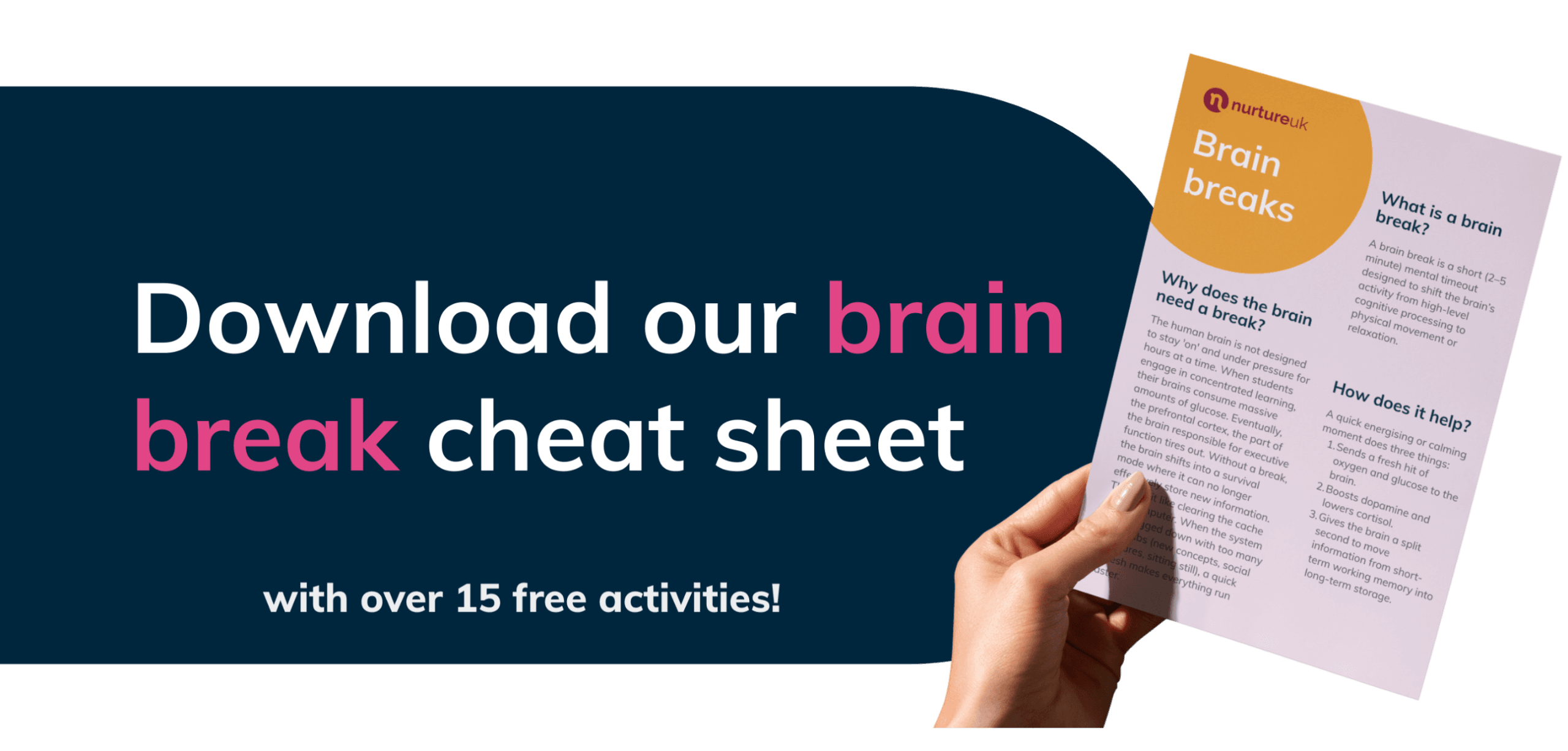
Download our Brain Break Cheat Sheet
Are you seeing increased behavioural incidents in your school?
Now is a time when pupil behaviour can often become more challenging. The run up to exams is well underway and this can cause acute anxiety in many children and young people, whether it’s SATs, GSCEs, A-levels, or anything test-related. Pupils can feel immense pressure and often they don’t have the right tools to deal with those feelings in methods that adults might find appropriate.
Think about something that causes you anxiety or stress – maybe a job interview, an important meeting, or a health concern. Generally, we have tools at our disposal to manage these distressing feelings. We might tackle it head-on with practical actions to prepare, or we might use some breathing techniques, talk through our worries with a friend, or take our mind off things with a walk. For the most part, our anxiety doesn’t spill over into our behaviour in problematic ways. We don’t throw things or have meltdowns (mostly).
But children are still developing the ability to manage their emotions in healthy ways, and they need help to regulate.
All behaviour is communication
Sanctions are sometimes necessary and appropriate in schools. But punishment without understanding is something we must avoid. Children’s behaviour is trying to tell us something that they cannot yet express with words. It is the tip of the iceberg and can signal the need for adults to look beyond the surface level.
If we as educators view challenging behaviour as a purposeful defiance of rules just for the sake of it, employing sanctions may result in short-term compliance in that child. What we might miss are the social, emotional, and mental health factors that are building up and eventually bubble over in their behaviour, and create barriers to learning that punishments will not solve.
Join our next cohort of nurture group training and become a qualified nurture practitioner
How do you address rising behavioural challenges?
If you’re seeing worsening pupil behaviour with rising violence, abuse, and classroom disruption, we suggest taking a relational approach to behaviour, rooted in the Six Principles of Nurture. Once pupils are identified as needing extra support (with an assessment tool like the Boxall Profile®), they will likely benefit from a nurture group intervention.
Spotlight on: Wentworth Primary School
Context: A large primary school in Kent saw increasingly challenging behaviour in pupils, particularly in one specific year group. Behaviour incidents happened on a daily basis, and peer disagreements often resulted in punching, kicking and fighting in the playground.
Response: Wentworth Primary School introduced the Six Principles of Nurture to staff and pupils and updated the school’s behaviour policy. They started weekly nurture groups with children from the most challenging year group.
Outcome: At breaktime, challenging behaviour has declined significantly. When incidents do happen, they are quicker to resolve and less likely to escalate.
Nine children were part of Wentworth’s first nurture group. In 2022-23, in the year prior to the introduction of the nurture provision, 57 behaviour incidents were recorded between them – of which 41 incidents (72%) were deemed severe and involved physical aggression. The following year, after the implementation of the nurture provision, the same children had between them 14 recorded behaviour incidents – all deemed to be low level behaviour – a decrease of 75%. The students’ attendance also improved from an average of 96.7% to 98.8%.
Nurture groups and their impact on pupil behaviour
Nurture groups are an intervention run by two members of trained staff with up to 12 pupils. Pupils who are consistently displaying concerning behaviour are often identified as benefitting from a nurture group. A nurture group is a smaller space which focuses on creating positive relationships with both pupils and peers. In this safe space, pupils are supported to develop their social and emotional skills, communication, and confidence, before (normally) returning to the mainstream classroom.
“In the short term, moving selected pupils into the Nurture Group reduced challenging behaviour within the base class. In the longer term, Nurture teachers and SLT felt that Nurture Group pupils returned to their base class more able to regulate themselves, which also reduced challenging behaviour and interruptions.”
– Impact of Nurture Provision in Northern Ireland, Department of Education (DE)
A key component of the Schools White Paper, released in March 2026, was improving pupil behaviour in schools, with the aim to equip “schools with the tools and guidance they need to improve behaviour.” The Department for Education recognises the need for ‘support first’ intervention – not late, reactive punishment. In line with this, they are investing in what they call ‘inclusion bases’, also known as inclusion hubs, nurture groups, or other names depending on the setting – a place where pupils can access targeted support.
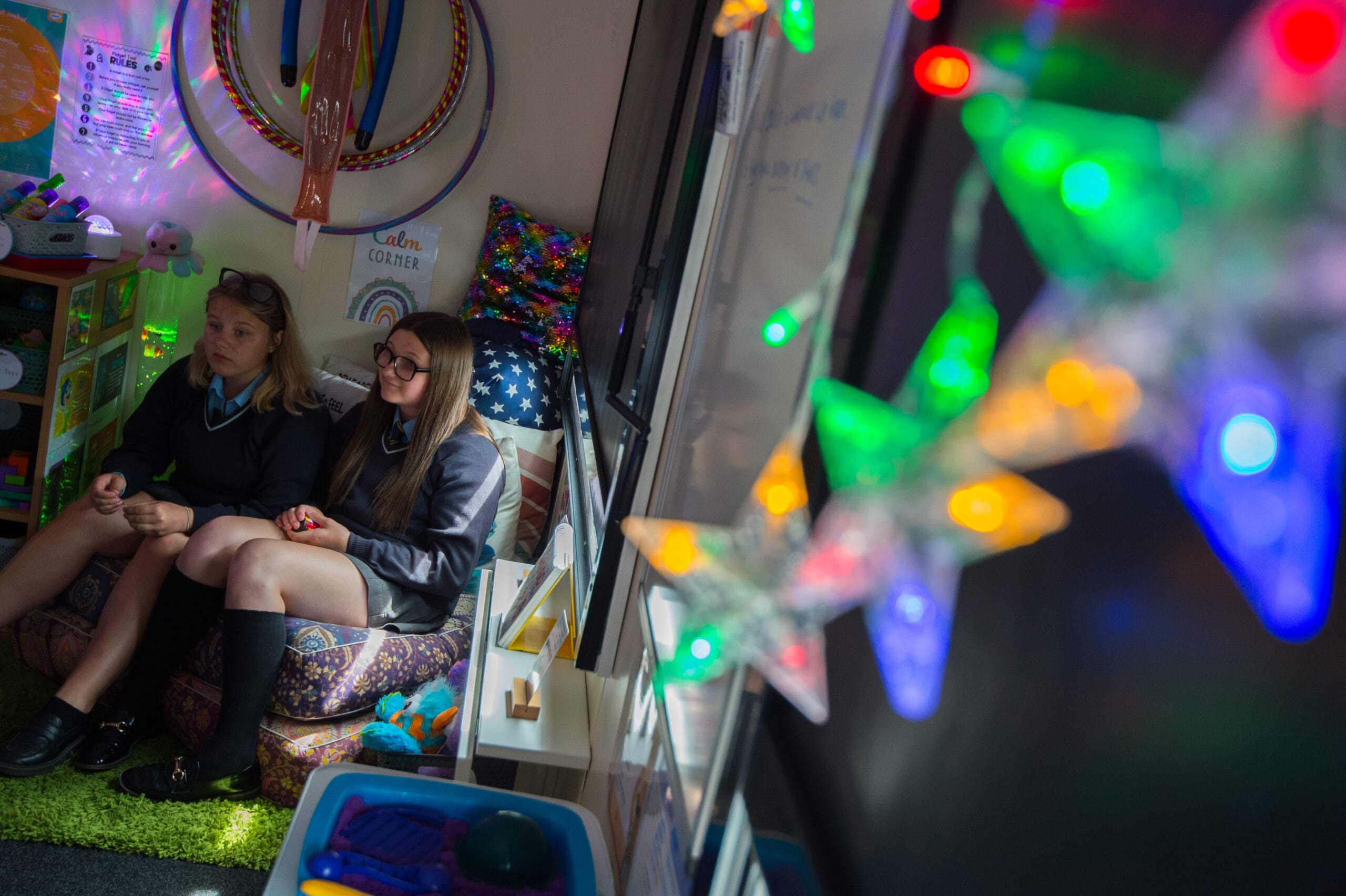
At nurtureuk, we have spent more than 50 years championing and developing nurture groups – the UK’s original inclusion-focused intervention. We know how to ensure these provisions are set up to succeed and deliver positive outcomes for pupil behaviour, among other barriers to learning. One of the first steps is upskilling your staff with the knowledge, tools, and strategies needed for a successful nurture group.
Join our next cohort of nurture group training and become a qualified nurture practitioner