

Posts Tagged ‘Mental Health’
How to support children with their mental health
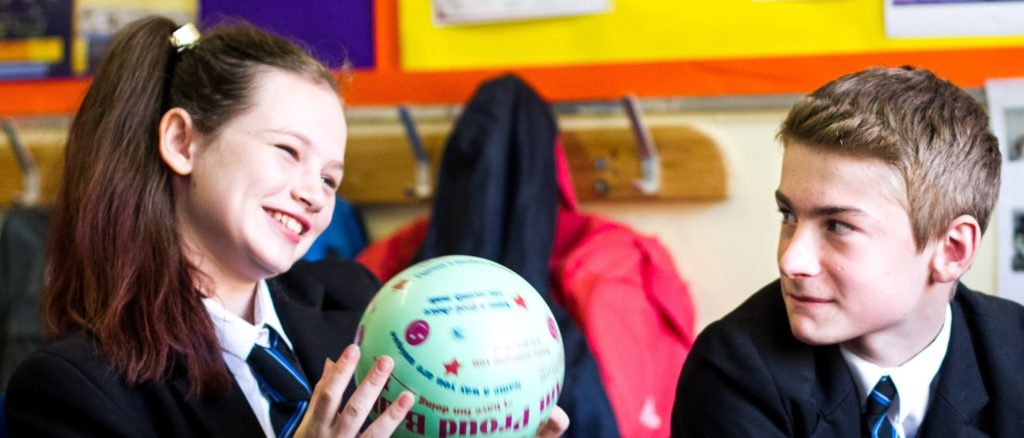
This week, we’ve joined with charities, schools, parents and educational professionals across the UK to support Place2Be’s Children’s Mental Health Week. Around 50% of people who have lifetime mental health problems first experience symptoms by the age of 14, and the awareness week has highlighted the importance of providing support early on in life.
This year’s theme of #growingtogether encouraged people to share stories of how they have grown, and who helped them along the way. It helps us to celebrate people like Robin Lee, founder of Wilds Lodge School in Oakham, whose passion to see every child flourish with their education led to many of his pupils with social, emotional and mental health (SEMH) difficulties receiving the support they desperately needed.
Robin, like many other education professionals, championed the nurture approach to improving the mental health of his pupils. Here at nurtureuk, we’ve made it our mission to improve the social, emotional, mental health and wellbeing of all children and young people across the UK.
Through our graduated approach to nurture, we ensure that every child in the school has the opportunity to flourish in their education, and has access to the support they need, when they need it. Whether they enter the education system with early childhood trauma, or experience it during their time in education, we work to support the social, emotional and mental health of all children, so no child falls through the cracks.
Children’s Mental Health Week has emphasised the importance of providing this crucial support for children and young people. But how do we know if the support is working? How do we measure the improvement in their social, emotional, mental health and wellbeing?
The Boxall Profile® Online is an assessment tool that enables staff to assess and track the social, emotional and behavioural development of children over time. It provides staff with an overview of the needs and how to respond to them – both in the classroom and with specific nurturing interventions.
The unique tool supports staff to develop their observational skills to include early identification of difficulties, and provides the opportunity to create individualised targets and interventions, as well as practical strategies and techniques for the classroom to help children and young people achieve their full potential.
The Boxall Profile® is now used by over half of UK schools that assess their pupils’ mental health. To find out more, please visit www.nurtureuk.org/what-we-do/the-boxall-profile.
The positive impact of nurture on children’s mental health

Today marks the start of Children’s Mental Health Week and the theme of this year’s campaign is #growingtogether.
Recent figures from charity Place2Be, which runs the week, show that one in six children and young people have a diagnosable mental health problem, and many more struggle with challenges from bullying to bereavement.
Schools have a vital role to play when it comes to supporting and managing children’s social, emotional and mental health needs. But teachers must fulfil this huge responsibility while also delivering the curriculum and ensuring all children achieve academically. So, what can they reasonably do?
The answer is nurture.
Nurture can transform children’s lives. It is improving the life chances of some of the UK’s most vulnerable children, but it also helps those who have mild to moderate social, emotional and mental health needs, and keep them well hidden.
Nurture allows children to connect with others, to build important relationships, and to develop a sense of self-worth. It helps them learn, play and communicate – and it is enabling children to thrive. We know this because teachers and parents tell us so. They tell us that their classrooms are calmer, their children are happier, and that their schools are more successful because of nurture.
The nurturing approach offers a range of opportunities for children and young people to engage with missing early nurturing experiences, giving them the social and emotional skills to do well at school and with peers, develop their resilience and their capacity to deal more confidently with the trials and tribulations of life, for life.
It can mean a specific set of activities for certain groups of children, or it can be developed as a whole-school approach that prioritises wellbeing.
The concept of nurture is rooted in attachment theory and neuroscience. It highlights the importance of social environments and their significant influence on social and emotional skills, as well as wellbeing and behaviour. A nurturing ethos in an education environment is empathetic, structured and fair for all.
This week, we’re taking the opportunity to talk about the benefits of nurture and show education professionals how they can help ensure all children flourish and learn.
Find out more about how your school can integrate a nurturing approach to education on our website.
nurtureuk responds to Ofsted’s mental health announcement

Responding to Ofsted’s announcement of new joint targeted area inspections examining the extent to which local services respond to children’s mental health, Dr Florence Ruby, lead researcher on nurtureuk’s Now you see us report, released the following statement:
“The acknowledgement of the vital role that schools play in identifying social, emotional, and mental health (SEMH) issues among children and young people is welcome, as is its commitment to ensuring inspectors take into account efforts taken by schools to consider the support provided by schools to children with SEMH needs.
Whilst the inspections will focus on particular children such as those who are subject to a child in need or child protection plan or are looked after children, we believe this is an important step forward and is in line with our goal of all schools being properly resourced and recognised for their efforts to understand and support pupil’s SEMH needs.
We particularly welcome Ofsted’s recognition that frontline practitioners have a role in identifying mental ill health.
In our response to Ofsted’s recent consultation into its new framework, we called for “a stronger focus on what schools are doing to gain an understanding of the SEMH needs of learners, and what they are doing to address them” in their inspections. This would serve to recognise the efforts being made by teachers to understand and support their pupil’s SEMH.
The measures announced by Ofsted in its joint targeted area inspections (JTAIs) represent a welcome step towards this, however in order for them to be effective it is crucial that participating schools are able to identify to SEMH among their students.
The Boxall Profile is already the most used tool in schools to understand the wellbeing and support needs of their pupils (Department for Education, 2017, Supporting mental health in schools and colleges: Quantitative survey) and was recently highlighted in the Department for Education’s 2018 Mental health and behaviour in schools advice.
In our recent Now you see us report, we shared the findings of piloting the use of the Boxall Profile with every child in school, conducted across four terms in 25 primary schools in England. Teachers in the pilot used the Boxall Profile to assess the SEMH needs of more than 6,800 pupils, and 92% of schools that successfully assessed all their pupils using the Boxall Profile found it very valuable and would recommend other schools do the same.
Once SEMH needs are identified, it is equally crucial that schools are given the resources to put in place the support needed. Now you see us found that when support was put in place following a Boxall Profile assessment, there was a 23% increase in the number of pupils who had no apparent SEMH needs after five months had passed.
Recent figures have shown that in a primary school setting, as many as one in 10 five to 10 year olds have a diagnosable mental health disorder (Sadler et al, 2018) and our research shows that addressing the social and emotional needs of children early on benefitted their SEMH, academic success, and could prevent them from experience more serious mental health and wellbeing issues in adolescence and later in life.
The JTAI package is currently aimed at young people between the ages of 10-15. Rolling out the measures further to reach children between 5 to 10 years old would have clear evidential benefits as this would support early intervention and would help prevent SEMH needs becoming more embedded.”
nurtureuk responds to Theresa May’s mental health announcement
Responding to the announcements today of a package of measures to help tackle mental health issues including training for all new teachers on how to spot the signs of mental health issues, national charity nurtureuk’s Chief Executive Kevin Kibble released this statement:
“We welcome any additional focus on identifying the social, emotional and mental health (SEMH) needs of children and young people in particular the commitment to update statutory guidance to make clear schools’ responsibilities to protect children’s mental wellbeing. However, we want to see teachers supported to do this with access to recognised tools in the classroom to enable them to identify each child’s SEMH needs. The Boxall Profile is already the most used tool in schools to understand the wellbeing and support needs of their pupils (Department for Education, 2017, Supporting mental health in schools and colleges: Quantitative survey) and was recently highlighted in the Department for Education’s 2018 Mental health and behaviour in schools advice. We believe every school should use it with every pupil.
In our Now you see us report, published last month we shared the findings of piloting the use of the Boxall Profile with every child in school, conducted across four terms in 25 primary schools in England. Teachers in the pilot used the Boxall Profile to assess the SEMH needs of more than 6,800 pupils, and 92% of schools that successfully assessed all their pupils using the Boxall Profile found it very valuable and would recommend other schools do the same.
It is not just access to tools to help identify SEMH need, schools need to be resourced sufficiently to put in place the support necessary to address them. As part of our “Now you see us” research we found that if support was put in place following assessment, there was a 23% increase in the number of pupils who had no apparent SEMH needs after five months.
Effective tools to support teachers to identify children’s SEMH needs are already being used by schools across the country. We hope this focus on mental health training for new teachers will include access to Boxall Profile training so that every child’s SEMH needs can be identified, and, vitally, that schools will be sufficiently resourced to put in place the support they identify children as needing.”