

Posts by nurtureuk
The Boxall Profile®, leading tool to assess the SEMH needs of children

The Boxall Profile® is a unique online platform used to assess the social, emotional and mental health (SEMH) of children and young people. The Boxall Profile® enables educators to develop a precise and accurate understanding of individual children’s social and emotional functioning, and to plan effective interventions and support activities to combat barriers to learning.
It is a highly regarded tool that was cited by the Department for Education (Department for Education, 2018, Mental Health and Behaviour in Schools Guidance) and is the most popular measurement used in schools to understand the wellbeing and support needs of their pupils (Department for Education, 2017, Survey: supporting mental health in schools and colleges).
Why is the Boxall Profile® so powerful?
The Boxall Profile® is a powerful tool that can help education professionals to understand what lies behind a pupil’s behaviour, providing an accurate and precise insight into their mental health and wellbeing as well as identifying the level of skills they currently possess to access learning.
This unique assessment tool is powered by over 50 years of rigorous, evidence-based research – tracking and managing children’s social, emotional and mental health needs.
Tiffany Dunworth, a teacher at Laurance Haines School, has described her own experience of using the Boxall Profile® and explains how useful it is in her role:
“This year was my first time doing Boxalls and I found it incredibly insightful. I found that it made me think more deeply about individuals and the results were interesting. For some children, choosing an answer was immediate, for others it took a little bit of thinking time. Conversations after the completion of the Boxalls were helpful and allowed me to understand why children are the way they are and what we can do to support them best. I was initially worried about doing the Boxalls as it was my first time, but I enjoyed the process and found the questions clear and understandable. I feel that I have a better understanding of how to support my pupils with their social and emotional wellbeing.”
Who benefits from the Boxall Profile®?
- Children and young people – the Boxall Profile® gives a voice to children and young people’s behaviours that otherwise go unexplained or often overlooked. It provides an early identification and assessment of needs so children and young people can get the specific support they need at school.
- Practitioners and teaching professionals – the Boxall Profile® increases practitioner’s confidence as they learn the underlying reasons for a pupil’s difficulties and how to overcome them. It offers education professionals a wide range of suggestions about relevant resources and strategies that they can use to support their pupils.
- Schools and educational settings – the Boxall Profile® provides schools with a framework for the systematic assessment of pupils. It also helps them to develop an evidence based, whole-school approach that promotes positive mental health and wellbeing across the school.
- Local authorities and governments – the Boxall Profile® produces quantitative evidence to explore and better plan targeted approaches aimed at supporting social emotional wellbeing. It also helps to measure the impact of mental health support offered to pupils with particular needs, across a whole local authority or whole country.
Why is the Boxall Profile® needed in schools in 2023?
With the effects of the pandemic still taking its toll, many children and young people are concerned about the lasting impact on their education and futures – and these concerns may lead to drastic behaviour changes. According to a recent study by YoungMinds and Beano Brain, the cost of living crisis has also had a negative influence on young people’s mental health as they have become increasingly anxious with concerns about money. It is vital that schools use the Boxall Profile® to identify what may be behind a pupil’s challenging behaviour and what their needs might be.
The need to nurture children and young people’s wellbeing and prevent the escalation of more complex mental health problems has never been more apparent. Schools should monitor the SEMH needs of all pupils and address them at an early stage. The best way to do this is to use the Boxall Profile® – it allows teachers to understand a child’s social and emotional competencies, and to plan effective interventions and support activities where needed.
By understanding and responding to children’s behaviours and the social and emotional pressures they are under using the Boxall Profile®, schools can de-escalate situations which might otherwise lead to exclusion. With the right support and training, many of these issues can be dealt with in a mainstream school setting.
Visit our Boxall Profile® website to learn more about the tool and why it’s important to complete an SEMH Assessment for each of your pupils.
Why schools should adopt a whole-school approach to nurture

A whole-school approach to nurture focuses on the emotional development and academic learning of all pupils, as well as embedding the Six Principles of Nurture throughout the policies and practices of a school. By adopting a whole-school approach, schools can not only understand and respond to the social, emotional, mental health and wellbeing of all pupils and staff, they can also help enhance teaching and learning.
At nurtureuk, we have spent over 50 years building an evidence-based approach and today we are known for supporting education professionals to implement expert nurturing practice in schools.
Developing a nurturing culture is different for every school. The way in which it is embedded depends upon the school’s core beliefs, pupil’s needs and the school’s commitment to supporting pupils to achieve their very best. There are several tools and resources that support this process, including the following:
- The Boxall Profile® – An assessment tool which provides an overview of pupils’ social, emotional and mental health (SEMH) needs, and how to respond to them – both in the classroom and with specific nurturing interventions.
- The Six Principles of Nurture – Developed by educational experts Eva Holmes and Eve Boyd in 1999, these are the core principles that should inform any nurturing culture and ethos.
- Nurture groups – A short-term intervention providing focused support to pupils with social, emotional and behavioural difficulties which make it harder for them to learn in a mainstream class.
Our National Nurturing Schools Programme helps schools to develop a whole-school approach that upskills leaders to embed a nurturing culture to improve the mental health and wellbeing of all pupils and staff in a school. Through embedding the Six Principles of Nurture and using the Boxall Profile® across the whole school, the National Nurturing Schools Programme supports schools to identify children and young people who need additional, more focused support through nurturing interventions or as part of a nurture group.
We want to see every child’s education and development embracing nurture. A whole-school approach is the most effective way to support every child with their social, emotional and mental health needs, and equip teachers with the necessary tools to meet these needs.
The tools teachers really need

Children and young people are dealing with social, emotional and mental health (SEMH) issues like never before. In the UK, the need for better support was widely recognised even before the outbreak of Covid-19, but the crisis has deepened. Current cost of living pressures, compounded by the continuing repercussions of the pandemic, mean increased stress and anxiety for many children and families.
Pupils facing SEMH challenges can be withdrawn and isolated, suffering in silence, others display hugely challenging and disruptive behaviour that significantly affects those around them. All are in desperate need of nurture – a different approach to learning that prioritises relationships and wellbeing.
Research has shown that a nurturing approach to education works for all pupils, helping every child to learn. Nurture provides structure and care experiences that may have been missing from a child’s early life. It gets to the heart of a child’s challenges and supports them to build connections and resilience. It is a highly effective way of supporting improved behaviour and increased attendance in schools, leading to better attainment.
We know that teachers, who are under huge pressures themselves, want the very best for the children in their care. But they must be properly supported and resourced in order to deliver it. Nurture provides them with the proven tools they need to help children thrive.
Embedding a nurturing culture and ethos throughout a school ensures that the SEMH needs of all children are identified and supported – not just those of the pupils who are visibly struggling. This whole-school approach can enhance teaching and learning and benefit the wellbeing of staff as well as pupils.
Our National Nurturing Schools Programme (NNSP) helps educators develop and apply a whole-school approach. It focuses on pupils’ emotional needs and development alongside their academic learning. Participants are guided by experts with extensive knowledge of nurture and the ways it can best be implemented in different settings.
We’ve been championing nurture for more than 50 years, and we know it works. We are urging schools and teachers to use nurture to support their pupils at this time of intense challenge. Nurture gives children the foundation they need to navigate school and life. It allows all children and young people to be ready and able to learn.
A powerful portrayal of the need for nurture

Serious violence, gang membership and sexual exploitation – the final report from the Commission On Young Lives (COYL) paints a horrifying picture of the growing risks for vulnerable young people.
It tells of youngsters being groomed, and lives and communities being destroyed by criminal activity.
But it also sets out robust recommendations for creating vital change and protecting children and young people from harm – one of which is encouraging a new era of inclusive education.
nurtureuk has long called for an inclusive education system that prioritises relationships and wellbeing and seeks to reduce exclusions. And we know that nurture is the way to make this happen. We’re delighted to see this key recommendation within the report.
Nurture gets to the heart of a child’s challenges and supports children and young people to build connections and resilience. It is a highly effective way of supporting improved behaviour and increased attendance in schools, leading to better attainment and reduced exclusions.
The COYL report recognises nurture’s importance, specifically calling for “a greater focus on nurture” in schools. The Commission proposes a new national action plan to protect those most at risk of exploitation and harm and to support all young people to leave education with improved life chances. This would mainstream some of the positive work of Violence Reduction Units (VRUs).
We’ve been working with VRUs for the past two years to reduce school exclusions and youth violence. Our latest involvement is as joint delivery partners of the Inclusive and Nurturing Schools Programme, commissioned by London’s VRU. The programme aims to keep children safe, supported, and thriving in school, tackle exclusions, and ensure children and young people have healthy relationship behaviours and attitudes. It is being rolled out across 70 schools in seven London Boroughs.
In her report, COYL chair Anne Longfield asks: “Who could propose that all our schools are well-funded and inclusive, that exclusions are always a last resort and that every child gets the help they need to succeed?”
We know, of course, that this is not the case. That’s why our work with schools is so essential. Teachers, who are often juggling high workloads, the multiple and diverse needs of pupils, and the pressure to deliver academic results, want the very best for the children in their care. But they must be properly supported and resourced in order to deliver it. Nurture provides them with the proven tools they need to help children thrive.
We’ve been championing nurture for more than 50 years and we know it works. We’re determined to keep changing lives by ensuring children are ready and able to learn. We very much look forward to continuing to work with all those who are striving to change the system for the better – let’s ensure children and young people have the best possible chance of successful futures.
Arti Sharma
CEO nurtureuk
nurtureuk’s AGM sets out vision for future

Inspirational and enlightening are just two of the words that spring to mind when describing yesterday’s nurtureuk AGM.
As a new nurtureuk employee, it was the first time I had attended and it was a genuine pleasure to meet some of our wonderful members and hear more about the incredible journey the charity has been on over the past couple of years.
Like many charities, nurtureuk has faced considerable challenges and change as it navigated a global pandemic and continues to evolve in a post Covid-19 world.
Despite this, we’ve gone from strength to strength and are determined to keep championing nurture and supporting education professionals at a time when our work is more vital than ever.
This passion and determination was clearly evident at yesterday’s meeting, as was the hard work and dedication of the education professionals we work alongside.
We were privileged to hear directly from the deputy head of a school in Kent that has been implementing nurture across the school. It was truly inspiring to hear just how nurture is transforming not only the lives of vulnerable individual children, but also of the whole school community.
Despite all the political and economic turbulence we’re currently facing, yesterday’s meeting left me hopeful for our vision of nurture in education being the norm. There is so much more we can and want to do to support practitioners and children and young people.
I’m very much looking forward to meeting more of our members in the coming weeks and months, and I’m keen to hear what more you think we can do for you.
Please do get in touch with any questions or comments by emailing members@nurtureuk.org
Suzi Bowles
Senior Membership Development Officer
International Journal of Nurture in Education Volume 8 now published

The latest volume of the International Journal of Nurture in Education has now been published. This issue features papers from across the world, including a study of nurture group implementation in Montreal, and an investigation into the experiences of nurture group educators in Malta.
The journal promotes the most up-to-date research of “how nurture principles and practice improve the socio-emotional functioning and academic achievement of children and young people”. In addition to academic researchers in education, psychology and child development, the journal also aims to support nurture practitioners, mainstream teachers, school leaders, educational and clinical psychologists, and local authority officers to help improve the social and emotional wellbeing of children and young people.
This volume of the journal features articles that examine the relationship between secondary school nurture groups and whole-school approaches, and explore the reduction in school exclusions and youth violence through nurture practices. It is also the first volume to include a book review from journal editor Tristan Middleton, on ‘Supporting Adolescents & Teenagers with Stress & Anxiety: A practical guide’ by authors Tina Rae, Jody Walshe and Jo Wood.
The journal is now available here. For more information, or to access previous volumes of the journal, please visit the nurtureuk website.
nurtureuk and Tender to deliver new inclusive education programme in London
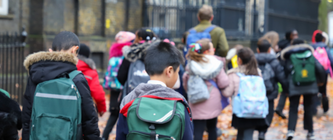
nurtureuk and Tender are delighted to announce their roles in a transformational new programme aimed at tackling school exclusions in London.
The charities have been named as joint delivery partners for the London Violence Reduction Unit’s Inclusive and Nurturing Schools Programme, which is being rolled out across 70 schools in seven London Boroughs. It aims to keep children safe, supported, and thriving in school, tackle exclusions, and ensure children and young people have healthy relationship behaviours and attitudes.
nurtureuk, which champions nurture in education, and Tender, a charity specialising in the prevention of gender-based violence and the promotion of healthy relationships between children and young people, will deliver the programme in partnership.
Lib Peck, Director of London’s Violence Reduction Unit, said: “We firmly believe in the importance of education and the support and guidance that good quality schools, colleges and alternative provision settings can give a young person. What’s also clear is there is a direct correlation between school exclusions and serious violence affecting young people.
“We’re redoubling our focus to minimise exclusions and keeping children and young people safe and engaged in their education. The VRU will be delivering a new, targeted programme – backed up with nearly £2m investment – to tackle school exclusions, sexual harassment and abuse.
“It’s crucial that we support schools – and our fantastic, hardworking teachers – to be safe and nurturing places where pupils’ needs – both educational and personal – can be identified early. We’re looking forward to working with nurtureuk and Tender in the delivery of our inclusive education programme to tackle school exclusions and help promote the importance of healthy relationships.”
nurtureuk CEO Arti Sharma said: “We’re delighted to help deliver this vital programme. Children are struggling with their social, emotional and mental health and wellbeing like never before. A nurturing approach in schools is now more essential than ever and this programme will ensure children are ready and able to learn. We look forward to working alongside Tender and the London Violence Reduction Unit to help achieve its aims of reducing exclusions and ensuring children can thrive in school.”
Tender CEO Susie McDonald said: “As one of Tender’s Youth Board members noted recently, preventing abuse and harassment is a form of care. We are therefore thrilled to be working with nurtureuk and the London Violence Reduction Unit to ensure that children receive the care and protection they need to enjoy and excel in their education. Positive social connections are foundational to children’s wellbeing, and we are excited to support schools to embed and embody healthy relationships education through this dynamic new programme.”
The initiative is being delivered in Barking and Dagenham, Enfield, Croydon, Greenwich, Hackney, Hammersmith and Fulham and Islington. The boroughs have been selected based on rates of suspension, absence, persistent absenteeism and pupils with special educational needs (SEN) support, as well as wider measures such as rates of Children in Need and domestic abuse incidents.
Making mental health and wellbeing for all a global priority

Today is a very important awareness day, World Mental Health Day, which takes place on the 10 October every year. It is run by the Mental Health Foundation and this year’s theme is to ‘make mental health and wellbeing for all a global priority’.
It is vital that we all look after our own mental health and wellbeing, as well as supporting others with theirs. There has been a global mental health crisis since the Covid-19 pandemic, with people of all ages becoming increasingly anxious and stressed. According to the World Health Organisation (WHO), there was a 25% rise in anxiety and depressive disorders during the first year of the pandemic. They also stated that there has been a severe disruption in mental health services. The need to nurture our wellbeing and prevent the escalation of more complex mental health problems has never been more apparent.
Here at nurtureuk, we are dedicated to improving the social, emotional, mental health and wellbeing of children and young people. Numerous research reports, including papers in the International Journal of Nurture in Education, have provided evidence of the positive impact that nurture principles and practices have on children and young people’s mental health and wellbeing. Embedding the Six Principles of Nurture within a school environment and developing an inclusive whole-class approach enables teachers to support all their pupils by removing individual barriers to learning. This can help to make pupils feel safe at school and to be able to get on with other pupils, as well as boosting their mental health and wellbeing by developing their confidence and resilience.
There are many ways to support children and young people’s mental health and emotional wellbeing in the classroom. Some of these strategies include:
- Making time for social-emotional learning, either during targeted PSHE lessons or by embedding it throughout the curriculum.
- Giving pupils the opportunity to practice their social and emotional skills – for example by encouraging them to work in pairs and groups.
- Teachers modelling good social and emotional skills themselves, when interacting with pupils and other staff members.
- Monitoring the social-emotional wellbeing of the whole class, using assessment tools like The Boxall Profile®.
Implementing a whole-school approach to nurture is the best way to support and improve the mental health and wellbeing of all pupils and staff in a school. Our National Nurturing Schools Programme supports schools to identify children and young people who need additional, more focused support through nurturing interventions, or as part of a nurture group. Teachers can help pupils to develop the social skills they need to thrive and ensure that their needs are met. It’s vital that schools are committed to supporting all their children and young people to achieve their very best and to make their mental health and wellbeing a main priority.
This World Mental Health Day we can all play a part in helping to increase the awareness of mental health and how crucial it is to manage our own mental health and to support others with theirs. Mental health and wellbeing needs to be prioritised all around the world for people of all ages. The rise in mental disorders is a global concern, and it is only together that we can put the right support and interventions in place to help ourselves and others.
New behaviour guidance is a welcome shift

New guidance that highlights the importance of a whole school approach to behaviour is now in force in schools in England.
The advice, published by the Department for Education (DfE), makes a welcome move away from the more punitive approach of former guidance – but does it go far enough?
Whole school approach
The guidance acknowledges that it is up to individual schools to develop their own best practice for behaviour management, but it gives a steer on how schools can and should ‘create a culture with high expectations of behaviour’. It is refreshing to see that school leaders are encouraged to take proactive steps to focus on positive behaviour. For example, the guidance suggests implementing a “behaviour curriculum” which clearly sets out what positive behaviour should look like. Staff should also have training on the behaviour policy and model the expected behaviour, and pupils should be routinely inducted and reminded of expectations, the advice says. The overarching aim of the new guidance is to create a “calm, safe and supportive environment” (a phrase emphasised repeatedly), as this limits disruption and promotes a school culture where children and young people can learn and thrive.
The guidance could go further still and recognise that behaviour policies can play an important role in fostering a nurturing environment and that a school culture needs to enable healthy social and emotional development for all pupils. For example, sections 41 to 44 of the guidance explain that responses to misbehaviour should aim to maintain the positive culture of the school and restore a calm and safe environment. There is a list of the various objectives as including: deterrence, protection and improvement. All these are important of course, but the obvious omission is the aim of supporting the social and emotional wellbeing of the pupil.
Nurturing approaches
There are a number of references to nurturing approaches – the guidance mentions “small groups” as being useful initial intervention strategies following behavioural incidents[1]. Still, nurtureuk would have liked the guidance to recognise that a nurturing approach is a central part of how schools can achieve the aim of “calm, safe and supportive environments” through behaviour policies.
The DfE consulted on the new guidance ahead of its publication. When asking which types of early intervention work best to address behaviour issues, the consultation found “many responses suggested targeted interventions to help pupils in managing their emotions and behaviour, such as mindfulness, emotion coaching, behaviour support plans, small nurture groups and support with transition from primary to secondary”[2]. It is disappointing that this emphasis is largely missing in the guidance itself.
Pupil transition and communication
It is encouraging to see the updated guidance takes into account the role of transitions on pupil behaviour. Section 10, which sets out what school behaviour policies should cover, includes – the importance of transition in children’s lives and advises that behaviour policies include detail on transitions, including the induction and re-induction into behaviour systems, rules, and routines’.[3]
Transition is one of the six principles of nurture, and it is good to see it included here. One of the other six principles: all behaviour is communication, is however not so well reflected in the guidance. A common response to the consultation regarding minimum standards of behaviour was that the guidance should recognise behaviour as both a form of communication and evidence of unmet need. It is therefore surprising that the updated guidance sidesteps this and continues instead to focus on ‘expectations’ of good behaviour.[4]
Overall, schools will find much of the updated guidance helpful in developing approaches to behaviour policy, with a whole-school approach that is consistent, inclusive and positive. There are signs here too that the new direction set by the Timpson Review, to prevent inappropriate and premature use of exclusions, is going in the right direction. However, nurtureuk would like to see future advice go further – fully reflecting the need for nurture in schools to enable all children and young people to be ready and able to learn.
[1] Behaviour in Schools – Advice for headteachers and school staff (publishing.service.gov.uk), section 96
[2] Government response to Behaviour guidance and Exclusions guidance consultation July 2022 (publishing.service.gov.uk), page 13.
[3] Behaviour in Schools – Advice for headteachers and school staff (publishing.service.gov.uk), section 10