

Posts by Tom Ryan
Nurture practice and the new Ofsted framework

The new Ofsted framework will be in force for school inspections in England from November 2025.
Beyond the headline changes on gradings and report cards, the stronger focus on inclusion is likely to bring more recognition to nurture practice in your school. There is more urgency than ever to ensure all learners, especially those with SEND (special educational needs and disabilities) or facing other barriers to learning, are included and get the support they need.
Ofsted: What's changed?
The underlying principle of the framework is that inspectors will consider how pupils achieve, belong and thrive: achieve academically and personally, feel that they belong to and are valued as part of the school community, and are kept safe and able to flourish, whatever their individual needs.
The inspection toolkit sets out in detail what inspectors will look for on safeguarding and six key areas:
- Inclusion
- Curriculum and Teaching
- Achievement
- Attendance and Behaviour
- Personal Development and Wellbeing
- Leadership and Governance
We’ve looked at ways that nurture practice can help focus your work and provide evidence in each of the key inspection areas.
Nurture practice and the six key areas
Inclusion
Ofsted inspectors will look at how your team identifies and supports pupils with SEND and other groups of pupils who may face additional barriers to their learning or wellbeing.
This broader definition of inclusion will bring more attention to the inclusive culture that is a prerequisite for successful nurture schools, as well as identifying and addressing social and emotional developmental needs (key barriers to learning and wellbeing).
If you’re already using the Boxall Profile® Online, you’ll know how it can help you quickly identify needs, plan your everyday high-quality inclusive teaching, use insights to reduce barriers to learning, and monitor the effectiveness of your adaptations. Rich data from the Boxall Profile® Online can also help you to present a powerful, data-informed story on progress to Ofsted inspectors.
If you’re new to the Boxall Profile® Online, you can try a full-featured free trial of our award-winning digital tool.
If you’re looking to develop your use of the Boxall Profile® Online, we recommend our Develop Boxall Pack, which includes our deep-dive training and our webinar on whole-school use of the tool.
“Using the information from the assessment of pupils’ needs to ... reduce barriers to pupils’ learning and/or well-being”
- Ofsted inspection toolkit (evidence for inclusion)
Curriculum and teaching
There’s a new focus in this framework on identifying and removing barriers to achievement, in curriculum design and in adapting teaching.
Understanding your pupils in greater depth using an assessment tool, like the Boxall Profile® Online, lets your team make effective changes to remove learning barriers caused by social and emotional needs. By reviewing the detailed reports on each child and reviewing needs within groups, your team can plan activities, and adjust tasks, teaching style or the classroom environment so that every child or young person is included.
“Staff know how to identify and remove barriers to achievement for their pupils“
- Ofsted inspection toolkit (evidence for inclusive curriculum and teaching)
Achievement
For pupils with SEND, the new Ofsted framework highlights the importance of setting high expectations, identifying the right priorities for pupils and ensuring they make progress.
For this group, in particular, we recommend using the Boxall Profile® Online to identify barriers to learning to make sure children and young people can make good progress.
"Leaders have identified the right priorities for pupils with SEND and are ensuring that they make good progress"
- Ofsted inspection toolkits (evidence for achievement for pupils with SEND)
Attendance and behaviour
When we take visitors around a school that holds the National Nurturing Schools Award, they’re often struck by the sense of calm. They can tell right away that the children and young people in the setting are cared for and supported within a positive and respectful culture.
Engagement is often key to improving both behaviour and attendance, and relational practice is a strong route to developing this. Relational practice will help by creating a more safe and secure environment, improving behaviour, engagement, and attendance.
We’ve put more of our tips into guides on attendance and behaviour. Our Relational Approach e-learning will help you and your team to get to grips with the key ideas.
“Leaders and other staff create a calm, orderly, respectful, supportive and positive environment in which pupils can thrive”
- Ofsted inspection toolkit (inspection of attendance and behaviour)
Personal development and wellbeing
When we visit a nurture school, we’ll invariably see a school culture that emphasises the development of wellbeing of every child, and a strong sense of belonging. The best schools are also really effective in identifying children and young people who need pastoral support, and work hard to build pupils’ social and emotional skills to boost their resilience.
Our highly regarded Theory and Practice of Nurture Groups training is not just for educators running nurture groups, it’s also a practical guide to nurturing interventions that can help all pupils feel like they belong.
Meanwhile, our forthcoming Nurturing Interventions pack focuses on activities that support social and emotional learning.
"Pupils feel welcome, valued and respected, and that they belong within the school community"
- Ofsted inspection toolkit (evidence for inclusive personal development and well-being)
Leadership and governance
The new Ofsted framework emphasises positive and respectful relationships, and how schools engage with parents, carers, and the local community.
The whole-school nurture approach, the National Nurturing Schools Programme, involves everyone within the school community.
Or as a first step, our new e-learning course gives your team practical help on working with parents and carers. You can access a discounted rate for your team along with with bundled publications in the Develop Parents, Families and Carers Pack.
"Leaders ... forge constructive relationships beyond the school, so that they can successfully engage and work in partnership with parents and the local community"
- Ofsted inspection toolkit (inspection of leadership and governance)
3 practical steps for your school to highlight good practice to Ofsted
1. Show you've identified barriers to learning with the Boxall Profile® Online
By using the Boxall Profile® Online, you will have clear evidence to show that you have identified pupils' social and emotional development and behavioural needs that act as barriers to learning, and that you have planned to meet these needs through individual or group learning plans.
Our unique digital tool helps you to understand the social and emotional development of the learners in your class, and pinpoint social and emotional difficulties they are experiencing.
You can sign up now for a free trial, or if you already use the assessment tool, our training, e-learning and publications packs can help you get full value out of your subscription.
2. Show your school is a welcoming, caring environment, where every child is valued
Under the new Ofsted framework, schools in England are expected to create a calm, orderly, respectful, supportive and positive environment in which pupils can thrive.
Schools that successfully complete the National Nurturing Schools Programme frequently report its transformational effect in creating calm, safe and supportive environments. Through pupil voice and parent feedback, they can immediately demonstrate that pupils feel valued and that they belong. Inspectors will be talking to more pupils than ever before as part of inspections, including pupils in each vulnerable group, and the new Ofsted report cards have a prominent section on 'What it's like to be a pupil at this school'. Schools that successfully use the nurture approach will also embed belonging and a welcoming environment throughout their approach to behaviour and attendance.
3. Show that your approach to behaviour and attendance addresses root causes
Nurturing schools often shine in the way their behaviour and attendance policies, and their approach to parental engagement work together to engage, rather than create barriers to improvement.
By fostering positive relationships between staff, pupils and parents, you'll build a positive and respectful culture that will be clear to inspectors.
Our Relational Approach E-Learning will give you a deeper understanding of why positive relationships are crucial for development and learning. The self-paced training will help you implement practical strategies and tools to foster a stronger connection with the whole school community. Our e-learning on working with parents and carers will help you develop a more nurturing approach.
Ready to continue your nurture journey?
Explore how nurtureuk can support your school's nurture journey:
Rethinking behaviour management: The nurture approach

Disruptive behaviour in UK schools is a significant challenge for teachers.
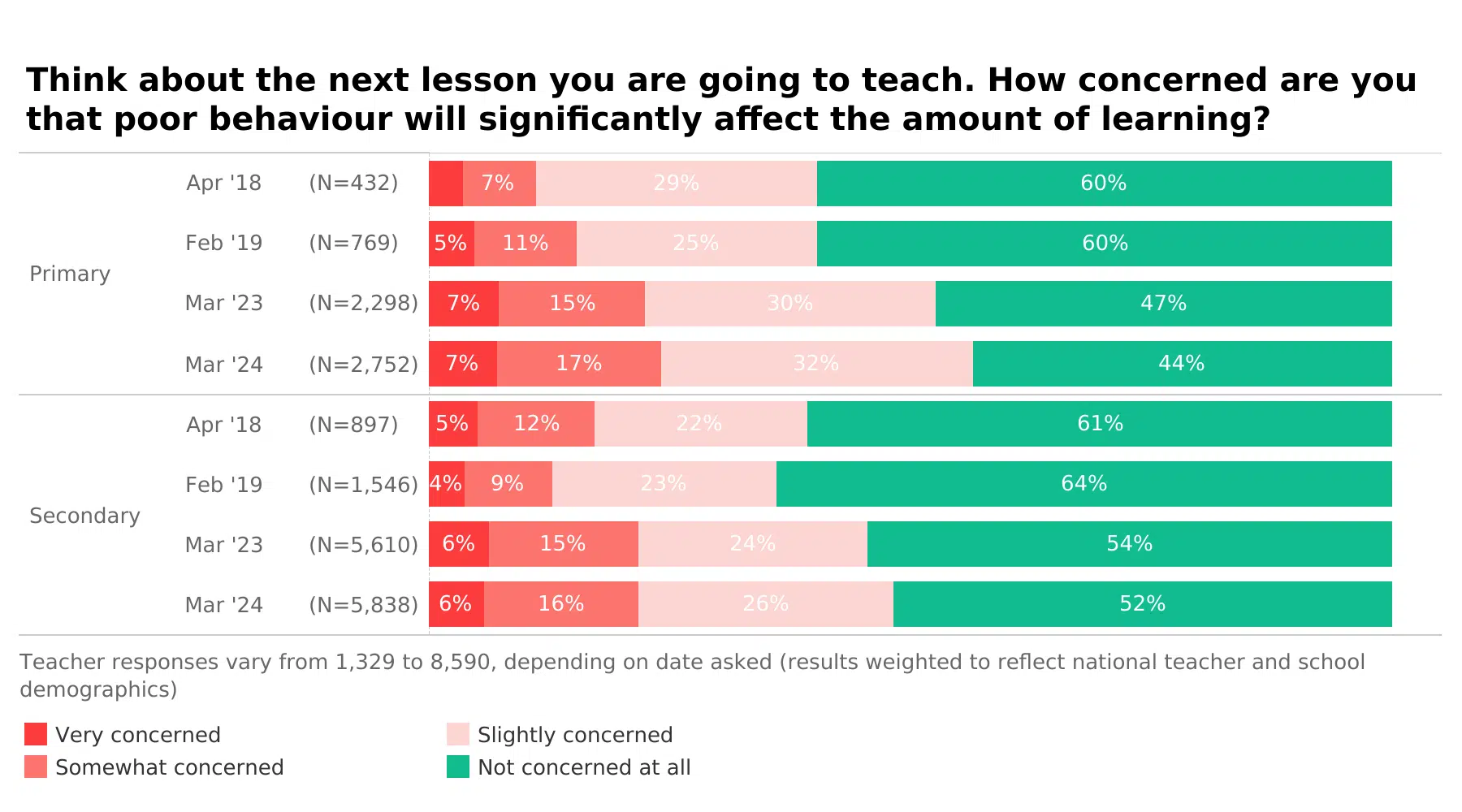
A Teacher Tapp survey in 2024 showed that just under half of secondary teachers were concerned about behaviour affecting learning. Just under half of primary teachers put behaviour in their top three concerns in another Teacher Tapp survey in February 2025.
As teachers’ concerns have grown, the number of suspensions has also increased, jumping by 21% between 2022/23 and 2023/24. Behaviour incidents and levels of disruption have continued to rise despite some schools adopting behaviour management policies that focus solely on sanctions and rewards.
The six principles of nurture
At nurtureuk, our work is guided by the six principles of nurture which offer a different perspective.
The nurture approach recognises that behaviour is a form of communication. This key principle can transform our response from reactive management to proactive prevention and support. As a charity, we believe that challenging behaviour usually expresses a need. A child that is withdrawing, or being defiant or disruptive is communicating something—an emotion they don’t know how to deal with, a struggle with a particular task, a feeling of anxiety, a lack of confidence or self-esteem, or an unresolved issue in school or at home.
Applying the six principles of nurture to behaviour
The six principles of nurture provide a powerful framework for understanding the behaviour you see in the classroom.
Children's learning is understood developmentally:
Behaviour is often a sign that a child's developmental stage is not aligned with the demands of the curriculum or environment.
The classroom offers a safe base:
Creating a physically and emotionally safe space is fundamental to a child feeling secure enough to learn and express themselves.
Language is a vital means of communication:
Language is understood as essential for expressing feelings appropriately, being understood to feel secure, and for fostering the emotional development necessary for self-regulation.
The importance of nurture for the development of wellbeing:
A child with low self-esteem may act out to gain attention, even if it's negative attention.
All behaviour is communication:
This is the cornerstone of the nurture approach. Instead of responding every time with sanctions, we need to look for the underlying message in a child's actions. What is this child trying to tell me?
The importance of transitions in children's lives:
Changes in school, class, or family life can be a huge source of anxiety, leading to a change in behaviour.
By embracing the principle that all behaviour is communication, your school can move beyond a punitive system. It prompts us to ask "what's wrong?" instead of "what have you done?". It invites us to look for the reasons for a child’s behaviour, not just focus on the action and its consequences. This is absolutely not about excusing poor or disruptive behaviour, but about addressing the cause so that the behaviour can change for good.
3 practical steps for your school to tackle behaviour
1. Understand your learners with the Boxall Profile® Online
The best way to preempt problems with behaviour is to ensure all children and young people in a school are assessed using the Boxall Profile® Online. This means that their social and emotional learning and mental health needs can be addressed before they result in poor behaviour.
Our unique digital tool helps you to understand the social and emotional development of the learners in your class, and pinpoint social and emotional difficulties they are experiencing. Through the strategies built into the tool, you can then plan learning activities for a child, a group or a whole class to help. If you’re a school leader, the tool can help you see at a glance where your learners are and what needs to change. Over 3,500 schools use the tool each year.
You can sign up now for a free trial, or if you already use the assessment tool, our training, e-learning and publications packs can help you get full value out of your subscription.
2. Redevelop your behaviour policy
Under the new Ofsted framework, schools in England are expected to create a calm, orderly, respectful, supportive and positive environment in which pupils can thrive. Schools that adopt the nurture approach frequently report its transformational effect in create calm, safe and supportive environments, with less disruptive behaviour. Behaviour policies are an important part of this.
The starting point for your behaviour policy should be a recognition that behaviour is a form of communication. Policies in some schools focus only on expectations of behaviour and sanctions for failure to meet these expectations, rather than acknowledging that behaviour can be evidence of unmet needs. This doesn’t mean that any behaviour is acceptable, or that there are no clear boundaries. Instead it means that we try to understand the cause, rather than jumping to a sanction that is unlikely to change the cause.
A redeveloped behaviour policy (sometimes redeveloped as a relational policy) is usually a key step for schools on our whole-school programme - the National Nurturing Schools Programme. Join the programme and you'll be under the guidance of one of our expert consultants, learning from other schools that have successfully rethought their approach to behaviour.
3. Get your team started with relational practice
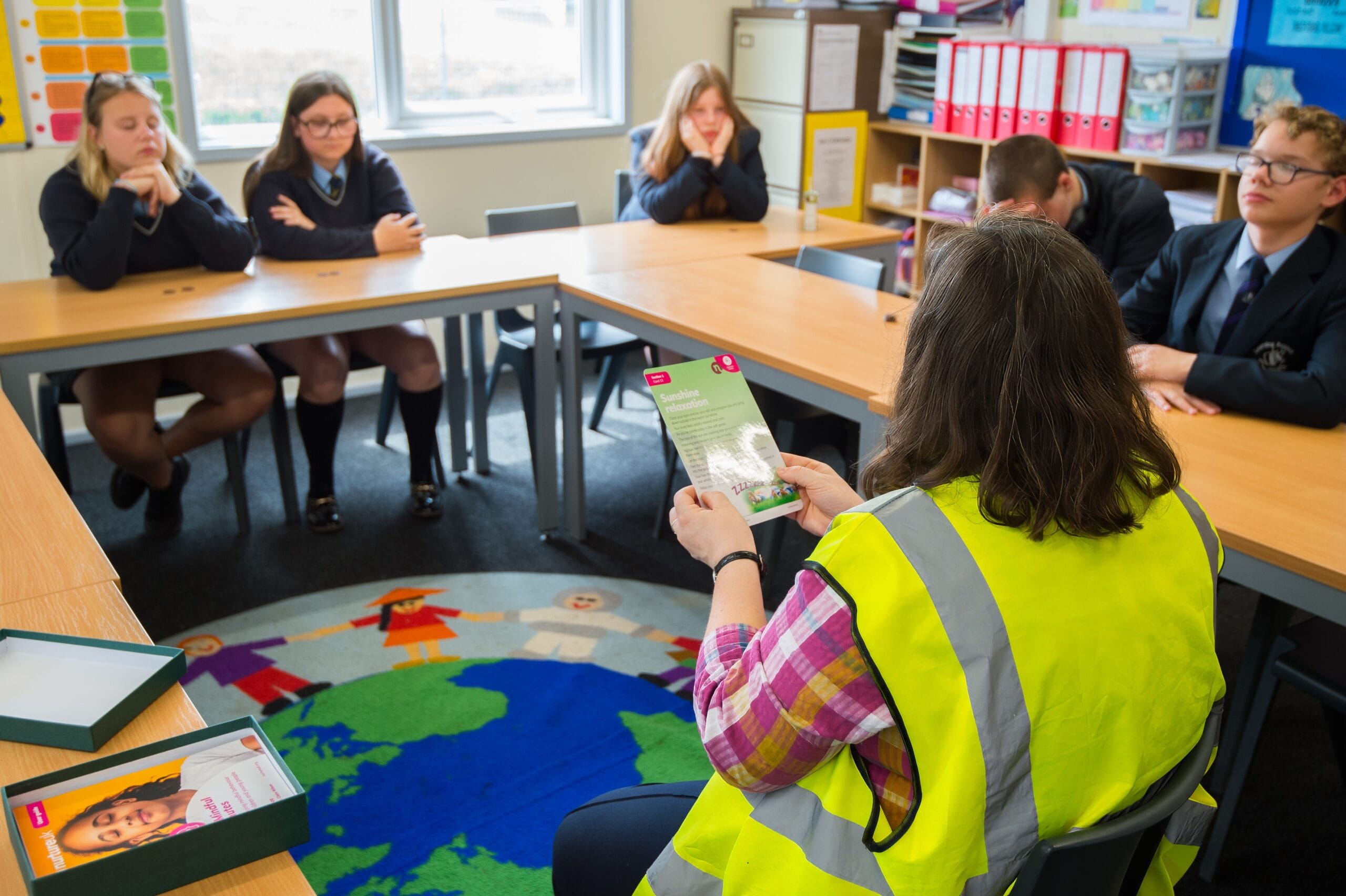
Building strong relationships with children and young people is a key strategy to improve engagement, which in turn reduces disruptive or other unwanted behaviour. By fostering positive relationships between staff and pupils, you'll build a positive and respectful culture in which staff know, support and care about pupils.
Our Relational Approach E-learning will give you a deeper understanding of why positive relationships are crucial for development and learning, and help you implement practical strategies and tools to foster a stronger connections with students and the wider school community. A supportive and predictable environment can reduce the need for a child to communicate through challenging behaviour.
Case study
Strong relationships support academic success in a Croydon school
Forest Academy in Croydon historically struggled with challenging behaviour in children. While the school was already doing much to support children and families prior to working with nurtureuk, they were eager to do more, so joined the Inclusive and Nurturing Schools Programme in 2022.
The school has a clear focus on establishing strong and trusting relationships with the children. Once in the classroom, pupils check-in emotionally via their zones of regulation (blue for sad, yellow for frustrated and so on). This not only builds emotional literacy but also alerts staff to any immediate pastoral needs. Regulation stations offer calm areas in every classroom to help pupils reset, restore calm, and gain a sense of security.
Since working with nurtureuk, the school reports that pupils are more engaged in lessons with improved behaviour and significantly fewer classroom disruptions. This was also reflected in academic outcomes last year, with 83% of pupils in KS2 meeting or exceeding expectations in reading, writing, and maths - that’s 22 percentage points over the national average, in a school where 66% of pupils are eligible for pupil premium.
Start rethinking behaviour with nurtureuk
Nurtureuk can support you on your journey towards creating a calm, productive environment in your school.
Ready to explore how nurtureuk can support your school in rethinking behaviour?
Improving school attendance using nurture

Every school works hard to achieve full school attendance. When children and young people are present and attentive, they're learning and growing. But for many, school can be a challenging place, leading to disengagement and, ultimately, absence.
Emotionally based school avoidance (EBSA) and a breakdown in relationship between schools and parents and carers are growing concerns. In most schools, attendance levels have not fully recovered to the levels seen before the Covid pandemic, and persistent absence levels have risen, particularly for children and young people with special educational needs, and those who are eligible for pupil premium funding. With attendance now a key focus area in the new Ofsted framework for schools in England, there's more pressure than ever to address persistent absence and to boost attendance.
Understanding the link between nurture and attendance
Absence from school is rarely about a child simply not wanting to be there. Often, it's a symptom of underlying difficulties that a child is experiencing. Children who struggle with anxiety, trauma, unmet attachment needs, or slower social and emotional development may find the school environment overwhelming.
Nurturing approaches focus on understanding these underlying needs and providing the support necessary to address them. By building strong relationships, developing emotional literacy, and creating a sense of belonging, schools can transform a child's experience, making school a place where they want to be.
We've set out five steps to improving attendance in your school using the nurture approach.
5 steps to improving school attendance with nurture
1. Identify needs to inform interventions
Knowing your starting point is the first step to making a difference in attendance. Our unique assessment tool, the Boxall Profile® Online, can make the difference between planning interventions in the dark and seeing clearly where a child is and what will help.
- Understanding the ‘why’: The Boxall Profile® Online gives a unique insight into a child’s social, emotional, and behavioural development. It helps you pinpoint specific areas of need that might be contributing to disengagement and absence, whether it's anxiety, difficulties with peer relationships, underdeveloped coping mechanisms, or challenges with self-regulation.
- Targeted support: Once an assessment has been completed, the Boxall Profile® Online generates a comprehensive report that highlights a child's strengths and areas for development. This data is invaluable for designing individualised intervention plans. Instead of generic approaches, you can implement strategies directly addressing the root causes of their absence.
- Monitoring progress: The online platform allows for repeated assessments over time, enabling you to track the effectiveness of your interventions. Are the strategies and adaptations you're implementing making a difference? Is the child's engagement improving? This data-driven approach ensures your efforts are impactful.
Our training, e-learning and publications support your use of the Boxall Profile® Online to maximise the impact of your work.
2. Improve engagement through relational practice
Relational practice is highly effective in boosting student engagement, and can boost attendance by helping to address the underlying social and emotional needs of pupils. The September 2025 Ofsted framework says that inspectors will consider how leaders and staff support pupils with emotional, mental health or medical needs that affect attendance, so a coordinated approach to this is key.
By prioritising strong, positive relationships between pupils and staff, parents, caregivers and community, schools can create a safe and supportive environment where children feel valued, understood, and have a sense of belonging. This relational foundation helps to build trust, encouraging students to voice concerns and engage more readily with learning.
Our Relational Approach e-learning will help you and your team to get started.
3. Help children feel safe and resilience
Schools have a duty to create an environment in which pupils feel safe. While every school works hard to make sure children are safe by addressing bullying and other that make children feel unsafe, many schools will also work hard to build the social and emotional skills of your learners can help build resilience, and equip children with coping mechanisms and self-regulation skills. This will enable them to move through setbacks and be able to learn. The nurture approach can significantly reduce anxiety and disengagement, leading to improved attendance as students feel more secure and motivated to be in school.
Nurture groups are an excellent way of re-engaging learners. Our accredited Theory and Practice of Nurture Groups course is the gold-standard training for teams working in nurture groups. The training can also be applied within the classroom and to support individual learners with targeted nurturing interventions.
4. Reduce anxiety in transitions to build engagement
Our guiding nurture principles recognise the importance of transitions, big and small.
Transitions between year groups and schools can take their toll on attendance, particularly in the move from primary to secondary school. Smaller transitions can also be a source of anxiety for learners.
Our products support effective transitions, to help you ensure that your learners feel safe as they experience changes both big and small. Our Nurturing Transitions e-learning will help guide your team through using nurture to make transitions feel less daunting. If you're already using the Boxall Profile® Online, adding the Transition Passport to your subscription can make transitions smoother.
5. Go whole-school so it all works together
The Department for Education's attendance guidance (Working together to improve school attendance) highlights the importance of a whole-school approach to reduce absence.
Our whole-school nurture programme, the National Nurturing Schools Programme, gives you the tools to make changes across your school community. Schools that have completed the programme have seen positive results on attendance. For example, in a study of the Nurturing Kent programme, attendance rates for pupils with identified SEND increased by 4.6 percentage points in the first ten months of the programme.
Case study
How nurture transformed attendance in a Belfast school
Belfast Boys' Model School, a secondary school for 1,130 boys, serves a community with significant social and economic disadvantage. Over half of students are eligible for free school meals. The school has a history of high exclusion rates, low attendance, and poor student engagement.
The school joined the National Nurturing Schools Programme in 2021, and successfully achieved the award standards in 2023.
A positive impact on attendance has been noted as a consequence of adopting a nurture philosophy. Pupils with low primary school attendance have improved their attendance after being involved in the nurture programme.
There has also been an improvement in engagement with the school from parents of pupils involved in the nurture group, and overall the school has improved relationships with parents.
Overall, there has been a reduction in suspensions this academic year due to the overarching nurture approach. They are currently tracking to have fewer than 700 suspension days in this academic year - a marked improvement on previous years.
The nurturing approach has brought significant benefits to staff as well as pupils. It has helped create a more positive, understanding school culture where staff feel more equipped to manage behaviour, build relationships, and support the emotional wellbeing of students.
Starting your journey to improving attendance with nurtureuk
®Addressing school absence requires a holistic and empathetic approach. Nurtureuk provides the tools, training, and framework that can help your school create an environment where every child feels valued, understood, and eager to learn.
Ready to explore how nurtureuk can support your school in reducing absence and fostering a truly nurturing environment?